I used to be indecisive, but nowadays I am not so sure.
There are two things I might write about this week, and I cannot decide which. So I will start with one, the last lecture in the “Music and……” series at the City Recital Hall, and see where that leads.
Two psychologists presented some findings on the subject of “Music, Feelings and Emotion.” They had undertaken extensive research using facial finite element analysis coupled to sophisticated software, and come up with these conclusions.
- If you are feeling sad, then listening to sad music will make you feel even more sad.
- If you are feeling sad. then listening to sad music followed by cheerful music will make you feel less sad and possibly even more cheerful.
Now these conclusions will not come as a surprise. It’s something most of us have worked out for ourselves over the years. But in this day and age even the most obvious truth seems to be subject to the need of a formal proof.
Adding to the idea of music affecting mood and emotions, last night Carlos was bubbling over with infectious enthusiasm for the music of Mozart’s C Minor Mass. It was impossible not to be caught up in his exuberance, despite the trickiness of some of the runs and the relentless rate at which they appear. He describes the music as “affirmative”, and “full of positivity.” It is clear that he would classify this piece as music to enliven the mood, reduce sadness and increase happiness. And who could argue?
In his enthusiasm, Carlos worked with us to take apart the music, inspect, repair and polish the individual sections, and decide how and where to put them back together again, producing a perfectly working whole from the multitude of components inherent in a double fugue such as the “Osanna.”
As we rehearsed, I thought of a friend who restores vintage motorcycles. His restoration process is very similar to our rehearsals. It involves taking components apart, getting each one to work in its own right, then re-assembling them to make a working machine. There is a deal of fine tuning on the way, a lot of trial and error, and considerable re-working when things do not quite fit together. Just like an MWC rehearsal.
And now we have come full circle, as this is the second thing I thought I might write about this week. C’est la vie!
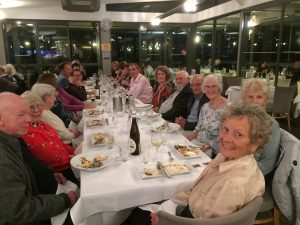 Wednesday evening this week saw about fifty members of the Choir at Limani’s on Narrabeen Lagoon for a most enjoyable dinner. The format was changed from previous years to reflect the different location. There was no quiz, and the formalities were limited to a short welcome from our President, Naomi.
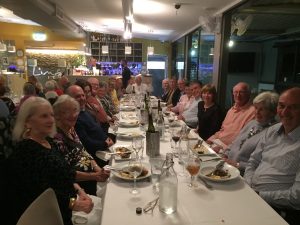 The food was up to Limani’s usual high standards, and the conversation flowed freely all evening. It was lovely to be able to have those extended conversations which on a Thursday evening at rehearsal are cut short by the ringing of the bell summoning us back to our seats. Once the meal was over, people seemed reluctant to set off home.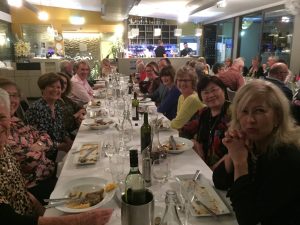
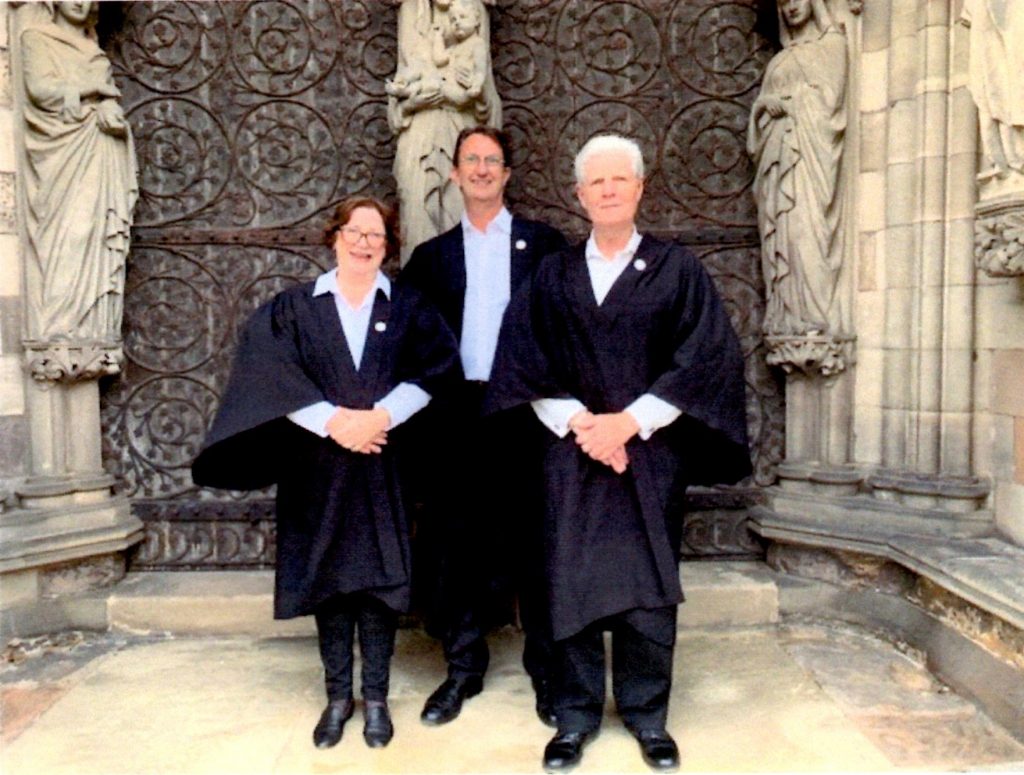
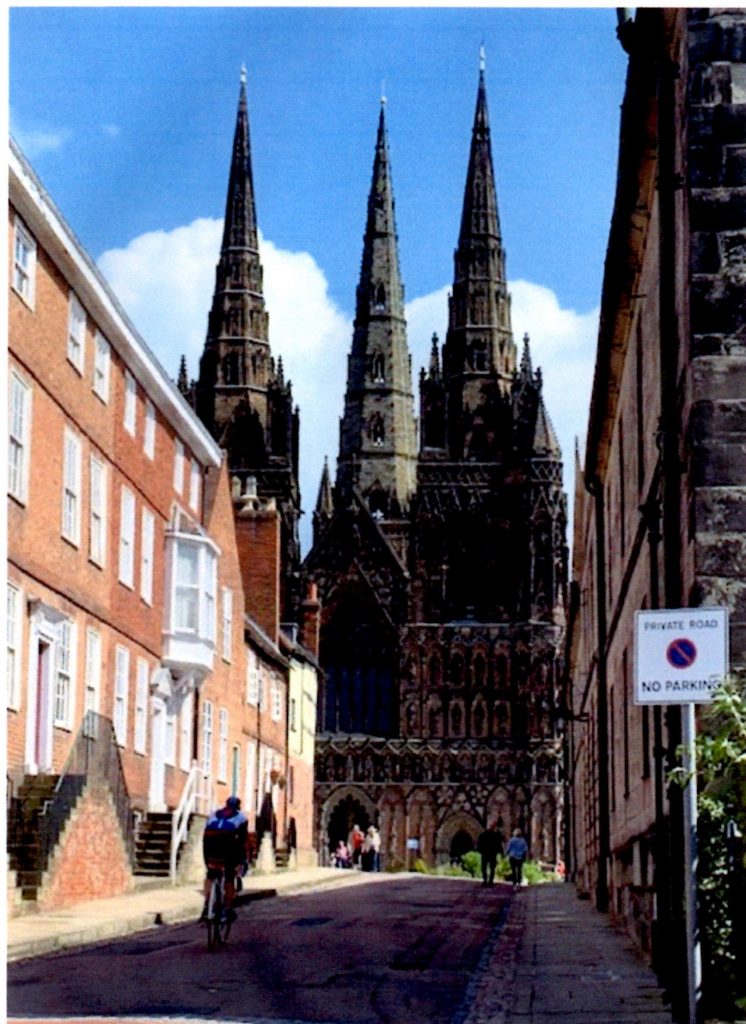 One of the reasons is that a number of MWC members also belong to the Mater Chorale, which for the last two weeks has been standing in for two Cathedral Choirs in the UK, The Cathedral Choir Schools, which provide the choir throughout term times, are on summer holidays. To maintain the tradition of choral services in the cathedral every day, other choirs are invited to take their place. the Mater Chorale were in Lichfield (see left) last week and in Winchester (see below) this week.
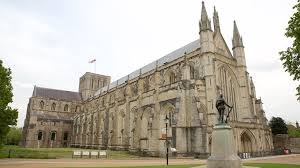 Each service includes two to four congregational hymns, sung to organ accompaniment. Then most services will need from the Choir an Introit, an Anthem, a Psalm (sung in traditional “pointed” style) and various chants such a the Gloria, Magnificat and Nunc Dimittis. And you cannot sing the same one at Evensong every day, nor in the three services which take place on Sunday. So there is a large repertoire to learn and i guess there will be extensive rehearsals every day prior to the services.