An early bath

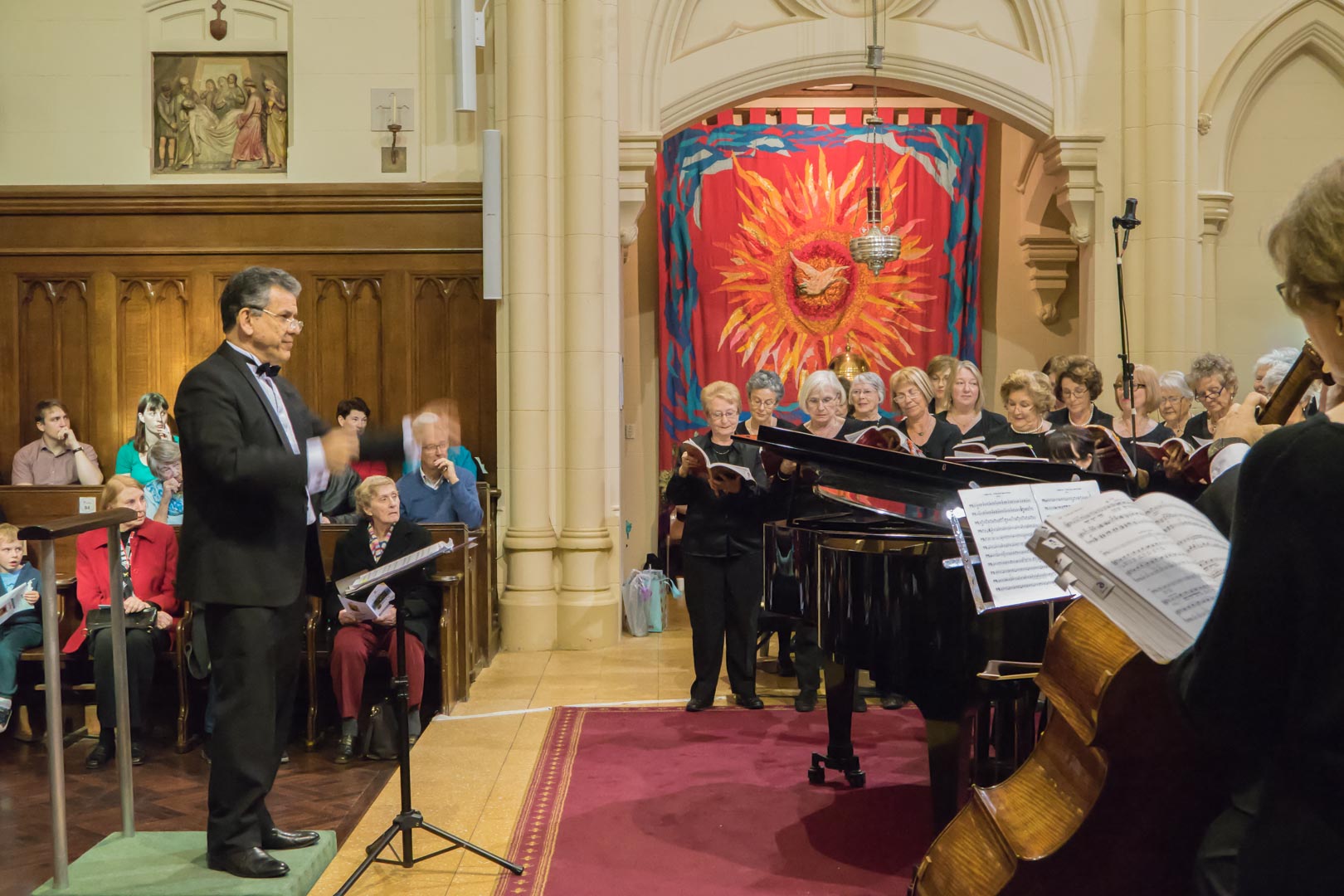
It’s not often that M W Choir rehearsals finish early, especially final rehearsals at the Cardinal Cerretti Chapel.  It’s more usual for Carlos to keep tidying up and polishing the  music way beyond the official end time, being the perfectionist that he is.

However, last night the final rehearsal for An Afternoon at the Opera did finish early.  “Why”, I wondered to myself on the way home.  There was a clue in his remarks at the end of the rehearsal, when he urged us to relax but yet to concentrate; above all to fully enter into the character of each piece and to enjoy singing such luxurious music.  Maybe, I thought, Carlos reckons that we are singing accurately, and we know what we are supposed to do with expression.  Hence he has done as much as he can, and it’s now all up to us to respond at the performance.

So that is our challenge for Sunday.  Concentrate and enjoy!

The early bath?  Those of us from England of a certain age will remember the Rugby League TV commentator Eddie Waring.  Whenever a player was sent off for a misdemeanour, he would say that they were going for an early bath, a hot communal tub being the sole method of recovery in those days.  Whereas for such players, an early bath is a punishment, for us last night it was a compliment and a bonus.


In the presence of heroes

It is well know in military circles that one soldier undertaking a courageous duty infects others to do the same.  It is also well-known in sporting circles that the presence of one really good player in a team raises the performance of others – hence the phrase “raising their game”.

So it was at last night’s rehearsal.  As we arrived, Carlos and Angela were rehearsing with our soprano soloist, Kathryn Williams, and she stayed on to rehearse the choruses where she sings with us.  And it turned out that she not only had a lovely voice and great presence, but she also was ready to listen to Carlos and take his ideas on board.  What an example for us to follow!

The rehearsal started a bit slowly and, frankly, a bit flat, in all senses of the word.  But it did not take long for that to change, and we soon started responding to Carlos’  pleas  for more meaning and expression in the music – in addition to singing all the right notes, of course.

Even after Kathryn had left, the mood of the rehearsal remained positive and inspiring: she had indeed been instrumental in “raising our game”.

All we need now is for that mood to continue to infect us as we run through the music at home; as we make final preparations at next Thursday’s key rehearsal; and of course on the day of the performance itself.

We are very privileged to sing with such inspirational musicians.
Let’s make the most of it.


The Opera Chorus

Yes, I know that our forthcoming concert is called “Great Opera Choruses”.   By one of the many strange quirks of the English language, Chorus can mean either the song to be sung, or the people singing it.  This post is about the Opera Chorus – the people doing the singing.

Why should I write about the people in the Chorus?  Because I have just realised what they do, and how much we should appreciate their consummate skill.

Bell Chorus

The first thing which prompted these thoughts was when Jim Abram, taking last night’s rehearsal, asked why we could not look at the conductor while we were singing just one long single note, so that he could show where it should finish.  There we all are, heads in our books – it must be very dispiriting for the conductor.  And if we are just singing a single note, surely we do not need the support of the notation in the book to remind us what we are doing!

The second prompt came as I stepped out of the shower this morning to hear ABC Classic FM playing the introduction to the Anvil Chorus.  Right, I thought, here’s my chance.  There is no time to find the score, so I will sing along from memory, perhaps even with some imaginary sashees across the imaginary stage.  Well…………..I got the notes right – mostly.  I got the louds and softs right, even remembering to do a gradual crescendo through each of the long phrases.  I got nearly all the entries on time.  But the words – oh dear!  I was completely at sea.  And then of course I did not have to worry about any stage directions, prancing around the bathroom clad only in a towel – I could make them up for myself.

That made me realise just what it takes to be in the Opera Chorus.  Not only do you have to have a great voice, and be able to move graciously around the stage, but you have to remember so much.  Notes, expression, words, your own movements, other peoples’ movements, when to watch the conductor, and no doubt many other things besides, all potentially dressed in some fearfully uncomfortable costume.

Anvil Chorus

So let’s hear it for the members of the Opera Chorus.  And let’s think of them when we rehearse and perform our own concert.  Let’s even have a go at emulating them, and committing at least some of the words and music to memory.  It’s worth it, just to be able to follow Carlos at key points, and so to make music of which we can be justifiably proud.


Letting go.

I must confess that I am little hoarse this morning, and can only attribute that to some over-zealous singing at last night’s rehearsal.  It’s all down to Carlos.

As I reflected last week, we are now beginning to be more familiar with the words and notes of these Opera Choruses.  Carlos has realised this, and is encouraging us to take on the parts of the people we are playing in the scenes represented by each chorus.  So, although last night started in a very restrained manner as we sang Dido’s Lament, things hotted up more than a little when we sang through the Porgy and Bess Suite, with a need to get quite passionate towards the end.

But then the forces of Grand Opera were released in full.  Tchaikovsky’s Waltz Scene from Eugene Onegin has us dancing and prancing – oh yes, and also scheming.  We have to portray all this without the assistance of costumes and scenery, so it’s important that we really throw ourselves into the parts.  And of course, it’s glorious music to sing with lots of good tunes and luscious harmonies over a great accompaniment.

Not content with having us sing ourselves out over that, Carlos then embarked on the Anvil Chorus.  You cannot sing that half-heartedly.  It’s high and loud (although there are one or two quieter bits as Carlos reminded us), and if we were on stage we would have to contend with the crack of metal on metal as the blacksmiths pound their work into shape.  So if we had not sung ourselves out previously, here was the opportunity – and the need – to do so.

And of course there are a few more – the drinking song from La Traviata and the Habanera from Carmen will be pretty full on, and the Chorus of the Hebrew Slaves from Nabucco is harder work than it seems.  Rehearsing these next week will challenge our stamina once more.  But there might be some respite in the Humming Chorus from Madame Butterfly and the Bell Chorus from Pagliacci.

Rehearsing these works has become huge fun.  Carlos works us hard, but it is well worthwhile.  The result are astonishing.  Let’s keep up the momentum by going over all the music between rehearsals, even if we only go through the words so that we do net get tongue-tied and we are can get into the right character.  If we carry on like this, it will be a great concert.


At last!

It has been a long time coming, but at last night’s rehearsal, the Opera Choruses seemed to start to come together.  Many of us have missed a few rehearsals, due to combinations of extended travel and sickness, and for these people, there has been a lot to learn in a short time.  But at last it is all beginning to feel like music rather than a set of notes represented by bewildering tadpoles distributed unevenly across the page, sung in languages that are in most cases anything but English.

I suspect that we had all thought that learning a set of Opera Choruses would be like a walk in the park compared with the complexities of the St John Passion.  How wrong we were!  Once again there are all sorts of nuances in the notes, both rhythm and pitch, and once again we are called on to play a different part in each chorus.  One minute we are singing a rollicking drinking song, the next we are grieving our exile from our homeland; then we have to circumspectly watch a seductress charm her target, then to mourn the death of our beloved.  And this only happens when we know the notes sufficiently well that we can anticipate the expression marks in the score and look up and follow Carlos’ directions.

It will be a great concert.  No doubt we will each have our own favourite chorus.  I can’t chose a favourite at present, but I have to confess that the suite from Porgy and Bess sends shivers down my spine at several key moments.

It will be very satisfying during the next few rehearsals to feel the music becoming more dramatic as we ease our way more deeply into each role.  For me, the key is to learn the words at home so as to be able to focus on the music on Thursday evenings.  It is amazing how much even a little preparation pays dividends!