Singing in the rain

Well, that is what it almost felt like last night.  Although we were protected from the elements during rehearsal, we certainly had to battle them to get there and to get home again – Carlos especially with his two-hour journey to Wollongong.  It was indeed one of those evenings when one could be forgiven for wrapping oneself up in a blanket on the sofa and watching one’s favourite TV show rather than going out for the evening, even to Choir practice.

But I would not mind betting that everyone who went to rehearsal last night, despite the weather, felt better afterwards than beforehand.  It has been another week of reports, both formal and informal, of the health benefits of singing in a choir.  In the April edition of Limelight, Guy Noble talks about the importance of including as many pupils as possible in school choirs.  By extension, I think he means community choirs such as MWC as well.  And as he says, “The joy of a choir is that sense of being part of something bigger than yourself.”  It is why many of us prefer choral singing to performing solo.

Then Gina Cottee passed on a copy of an article from the NSW Doctor Magazine, by a doctor who is a member of the Sydney Male Voice Choir.  He cites research from Gothenburg, London, Harvard and Yale universities, proving that choral singing is good for the heart, for the immune system, for upper body and facial muscle tone and even increases life expectancy.  It also reduces feelings of depression, calms and soothes like Yoga, improves memory and concentration, broadens the imagination, and enables a greater appreciation of the world around us.

But then, we understand all this already, don’t we?

However, we all know people who do not sing: for some of us, it might be our nearest and dearest.  Should we worry about their missing out on all the benefits we derive from MWC?  Well, other reports emphasize similar benefits of other activities.  Team sports feature highly.  I have never played any, but I can imagine the combination of physical and mental effort combined with teamwork giving similar benefits to singing.

Gardening is also supposed to be good for you.  Gardening?   Spending all your time getting rid of the plants you do not want in your yard so there is barely time or energy left to think of what you do want to grow there?  Carefully placing and nurturing the plants you do want, only for the flowers and fruit, or possibly even the plant itself, to be destroyed by the local possums, bandicoots and cockatoos?  How can the most frustrating activity ever devised by man possibly yield any benefits? 

But then I suppose that’s what some people might think about singing.  And I may have quite the wrong idea about gardening.  Anyway, I will leave gardening to others, and just stick to what I know works, which is indeed singing.

A full run-through

Earlier this week, thinking about possible themes for the weekly musings, many possibilities came to mind – the delightful concert by the Ryde Hunters Hill Orchestra which Carlos conducted last Sunday, a stunning cross-cultural concert on Tuesday by The Song Company in the spell-binding acoustic of St Mary’s Cathedral Crypt, and further evidence of the health benefits of choral singing, were all candidates.  However, they were all blown away by last night’s run-through of the complete A German Requiem. 

First full run-throughs are always special, but this one the more so for me  I had managed to carve out an hour during the week to read through the entire text in German and in English, and in doing so had gained a real appreciation of the structure of the whole work – textually and musically.  It’s like an arch.  No’s 1 and 7 are the abutments, anchoring the work on both sides; No’s 2 and 3 are the approach on one side; No’s 5 and 6 are the downward run on the other side, and No 4 is the keystone, slap bang in the middle, without which everything else would fall apart.

After last night, the structure stands out even further.  No 4 (How lovely are thy dwellings fair) is the shortest piece in the work, although for many listeners the most beautiful.  Like the keystone of a bridge, it holds the whole piece together.  It is a perfect link between the two halves of the work; moving from reflections on the transient nature of human existence which we mortals all understand, to affirmation of a permanent resting place in a  world which is inevitably something of a mystery to us.

There are so many moments of pure joy in this work.  Every piece has a number of special moments for each voice.  My own favourite is when the basses in No 6 sing “Zu nehmen preis”  (“You are worthy to receive glory“) in unison with the trombones on a series of ascending arpeggios, something guaranteed to make the hair on the backs of our necks stand on end.  And the transitions between pieces are ethereal, for example everyone singing at full blast at the end of No 3 followed by the gentleness of No 4; and the subtle change of key from E flat in No 4, to G in No 5 which softens the mood to introduce the idea of the comfort naturally given by a mother to her children.

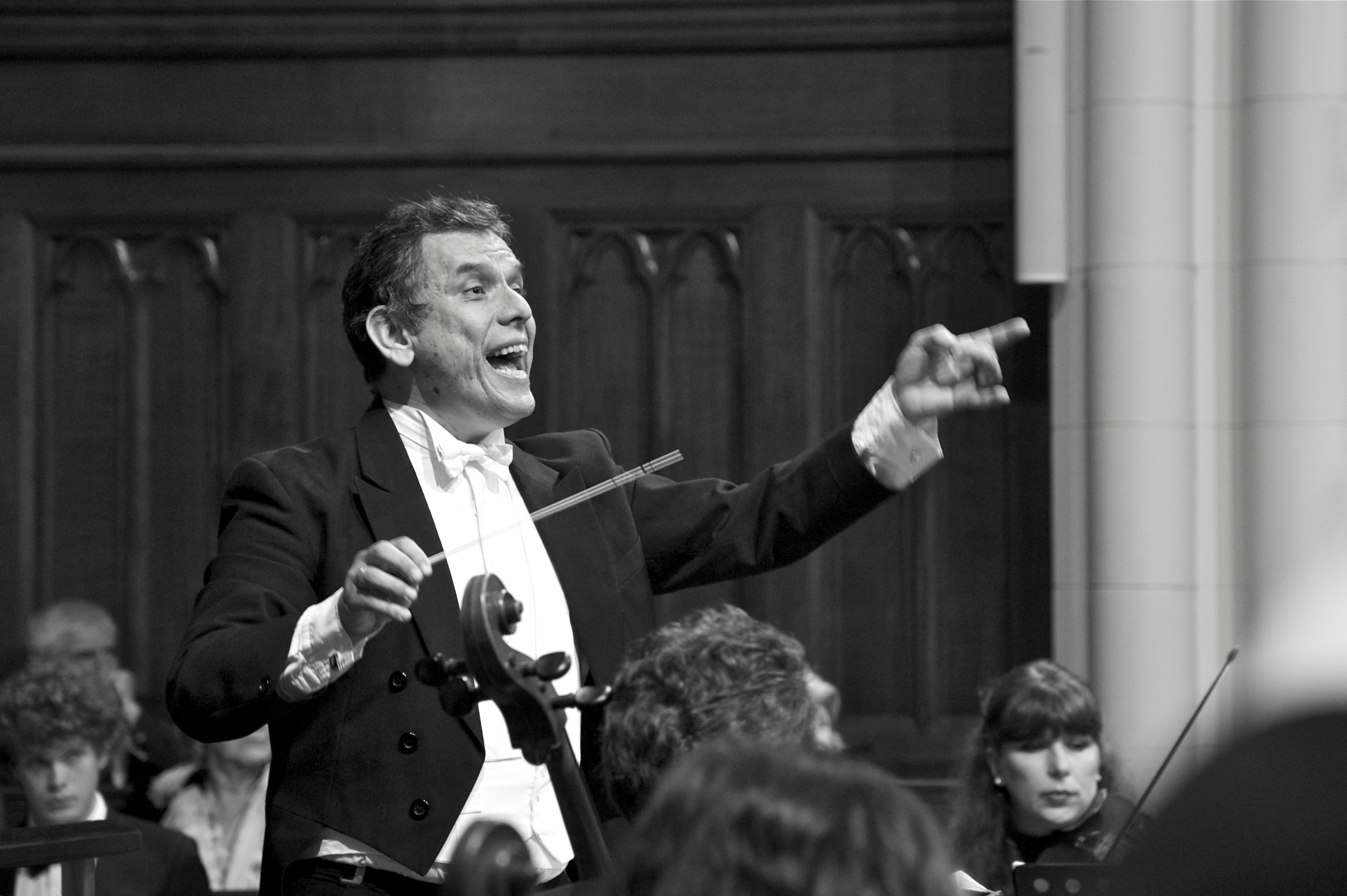
I have rambled on for long enough.  This is a wonderful work of art, and we are extraordinarily privileged to be led in singing it by Carlos.  He not only understands the music, but he immerses himself in it, and in doing so, takes us along for the journey.

So, if you have not yet read through the text, try and make time to do so.  It’s worth every minute.

The Art of Fugue

Last evening and next week, Carlos is working us hard on the two big fugues in Brahms’ A German Requiem, occurring in Sections 3 and 6.  That set me musing about fugues in general, the role they play in music and how they came to be.

If you want to read a full treatise on the subject, as usual Wikipedia is a good place to start.  Their page is here.  In short, it is a piece of music which starts with a melody  sung in succession by each voice, in different keys.  This leads to variants of the melody being sung in counterpoint, again in different keys, eventually the main tune coming in definitively in the original key before the whole piece comes to a conclusion.  I think Brahms’ two fugues in the A German Requiem match this description quite well.

“Fugue”  comes from French and Italian words meaning chase or flight in the sense of running away.  And that is what many fugues seem to do, especially those in A German Requiem.  It is a highly developed musical form, requiring concentration and skill to perform well, as we are finding out  The master of the technique was J S Bach, who wrote so many wonderful fugues for organ, orchestra and choirs that many subsequent composers paid homage to him by using the same form.  Brahms is probably one of those composers.

For a light-hearted look at fugues, you may like to watch this recording.  The noted Bach scholar and performer Glenn Gould wrote a fugue called So you want to write a fugue.  Click here to watch it.


The dreaded jetlag

Jetlag is something which all long-distance travellers “suffer”.  I mused this week, whilst “suffering” myself, that we travellers should perhaps stop using the word.  After all, we are “suffering” because we have the privilege of having time and money enough to broaden our minds by immersing ourselves in other environments and cultures, a luxury of which many people can only dream.

I was feeling somewhat yonderly as I arrived at rehearsal last night, having been back in Sydney just two days after a long distance flight from Europe.  It did not take long for Carlos to sort that out.  After a five week break, it was energising to be back amongst friends singing some of the most wonderful music ever written, under the direction of someone who knows, loves and cherishes the music and all that it stands for.  By the end of the rehearsal, the feeling of yonderliness (no, Spellchecker does not like this word but I can’t think of any other) had entirely evaporated, and then I had the best night’s sleep since arriving back.  But then we all know it – singing is good for you and cures all sorts of ailments, apparently including jetlag.

And what were some of our mind-broadening experiences in Europe?  Musically, attending a concert in a small Yorkshire Dales church given by a UK Championship brass band (did the roof really raise a few inches before settling down again?), joining in Choral Evensong in the intimate and historic Chapel of Christ’s College Cambridge, and hearing the Dresden Philharmonic play Brahms’ Second Symphony (did someone once say that only German orchestras should play Brahms as only Germans understand his music – they could be right).

It is great to be back with the Choir, with the prospect of several more insightful and exacting rehearsals of this marvellous work, culminating in an exciting and exhilarating performance in the Cardinal Cerretti Chapel in May.


How to fill a hole

For the next five weeks there will be a hole in my life.  It is true that a trip to Europe for family and other reasons will keep me well occupied, but I will miss the Choir’s weekly get-together on Thursday evenings.

But A German Requiem will be amongst the music on my iPod, to keep me amused during some long flights and rail journeys.  Should I take the score?  It’s rather bulky and heavy.  Maybe I should just take a copy of the words.  They bear some close examination.  Even singing pieces 1 and 2 last Thursday and glancing at the English words as other voices were singing, it is clear that Brahms wrote this from his heart.  We know that his Mother had died recently, and some commentators say that another death was preying on his mind, that of an unidentified close friend.  Was this perhaps a lady friend?  It it too much of a stretch to wonder if perhaps it was someone he was so close to that he had hoped that they might have married eventually?  After all, he never did marry……..

Whatever the suppositions and imaginings, the choice of words is very powerful.  Once I return Carlos will be in full command, and I think I would benefit from understanding them fully before coming under his eagle eye and ear again.

In the meantime, happy rehearsing!