Singing starts again on January 22nd

Rehearsals for the next concert start on Thursday 22 January.

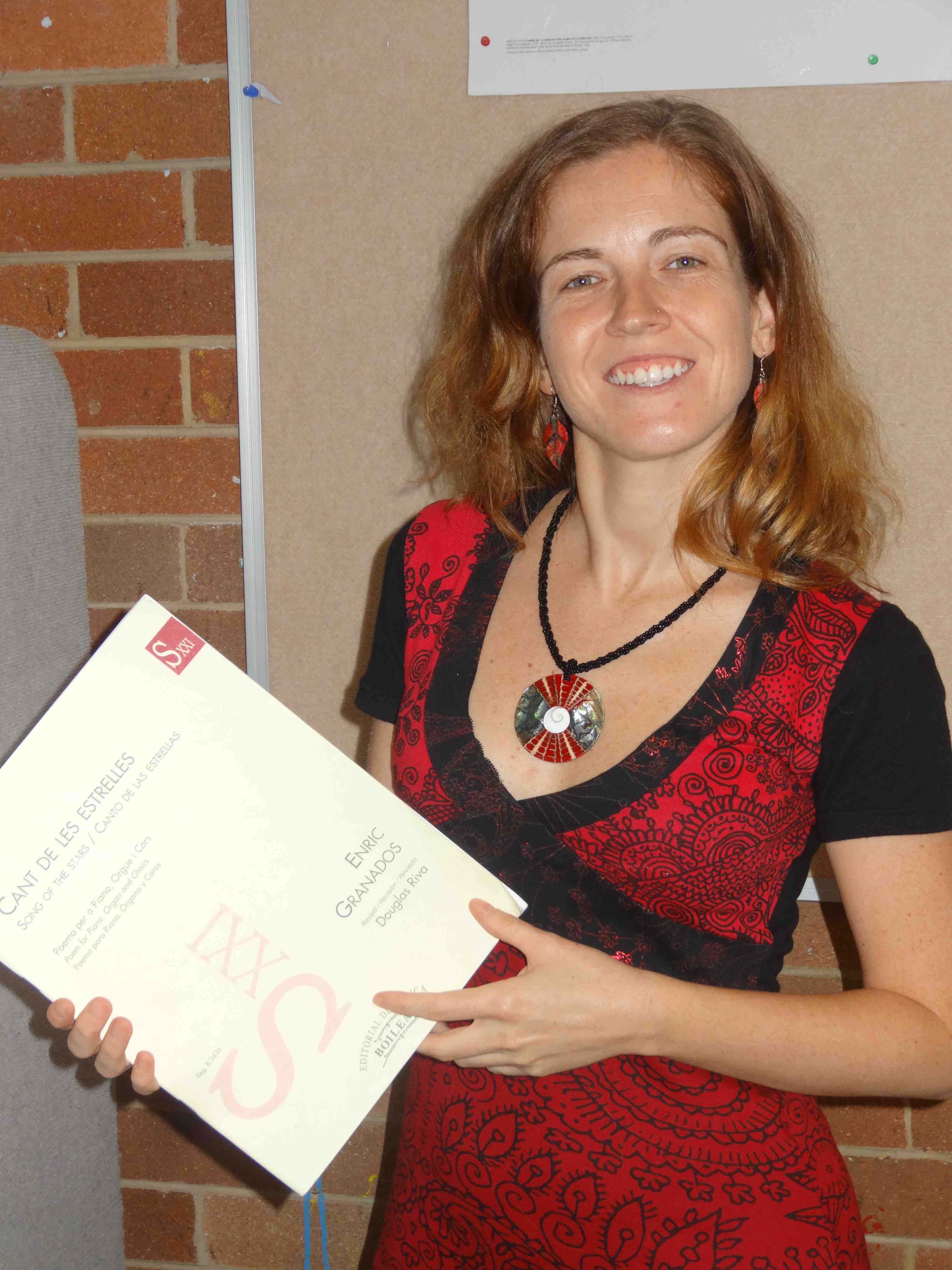
It’s an exciting programme of music, comprising Haydn’s Paukenmesse (Mass in a Time of War), plus two little-known but delightful Spanish works : Cant de les Estrelles (Song of the Stars) by Granados and Le Cant dels Ocells (The Song of the Birds) by Casals.

In addition and continuing the Spanish theme of the first half of the concert, there will be the orchestral / piano piece, Nights in the Gardens of Spain by de Falla.

We will also be taking part in the Australian Premiere of Granados’ Cant de les Estrelles,at the Sydney Conservatorium of Music on March 24th.  There will be special rehearsals for this performance during the previous week, details to be confirmed.
For information on this concert, click here. 
For concert bookings, click here.
For more information on the project, click here.

More details for Choir members is available here.

M E S S I A H

The final concert of our 2014 season was Handel’s Messiah, conducted by Dr Carlos Alvarado, with soloists Jenny Liu (Soprano), Ellen Malone (Contralto),Joel Scott (Tenor) and Greg McCreanor (Bass).

The performances were very well received by near-capacity audiences.  Sunday’s performance was memorably interrupted for a few minutes by the Fire Alarm, which had been triggered by a lightning strike elsewhere in the College.  We kept calm and carried on, once the alarm had been silenced.   One member of the audience was heard to comment that, with the torrential rain and lightnig strikes outside, she felt that the safest place to be was inside the Chapel, in the company of The Messiah.


A warm afterglow…………….

It is two weeks since we sang the Brahms German Requiem up at the Cardinal Cerretti Chapel, and the music is still resonating through my head at all sorts of unexpected moments.  Talking to other Choir members, it is clear that I am not alone in experiencing these “flashbacks” to yet another wonderful musical experience.  It must be some combination of the text, the music and the connections which Carlos made between them, which have fixed themselves in the unconscious, to surface later at the least provocation.

It was a memorable concert for several reasons.  Firstly, the weather on the day left no doubt that we would be able to have the planned refreshments outside afterwards.  It was an hour and a half after the concert finished that the last audience members went home, so that could be counted as one success.

Then there was the accompaniment of the two pianos.  Some of us were initially nervous about not having an orchestra.  But at the final rehearsal, any doubts were dispelled.  Angela and Gregory played masterfully.  When the Choir was singing quietly, their touch was so light that we could be confident of being heard.  And when a full orchestral-style sound was required, they challenged us to join in a torrent of well-controlled, ever expressive, phrases, creating continual contrasts in tone and colour.

Lastly, as always, Carlos made sure at rehearsals that we understood what we were singing.  That, to me, is the mark of a great conductor.  The music is not there for its own sake: it is there as an integral part of communicating ideas and feelings deeply held by the composer. Our role as performers is to channel the communication from composer to audiences.  From feedback received, it is clear that we did exactly that, and we did it very well.

Congratulations to everyone who had a part in making the concert such an enjoyable and satisfying event.

Gounod Gets us Going

What a tease!  This Mass by Gounod, his St Cecilia Mass (she is the Patron Saint of Music) really catches us singers unawares much of the time.  The notes are largely straightforward.  The words – well, they are not the easiest to read in our scores, even though they are familiar.  But the expression markings – the pianos and and the fortes and so-on, well, they can be quite unexpected.  Every movement starts quietly, even the Gloria.  And then most of them move up and down the loudness scale time and time again, often up and down in the space of just a couple of bars.  The Sanctus is the most interesting movement.  It’s as though we start in the celestial darkness, far away from the throne of the Almighty.  We seem to move towards the throne in stages, the light gradually increasing, until there is a burst of light – and accompanying sound – when we finally are ushered into the presence of the Almighty.  It’s great theatre – very dramatic – and the music matches the ideas perfectly.  I can’t wait to sing it with the orchestra accompanying us!